
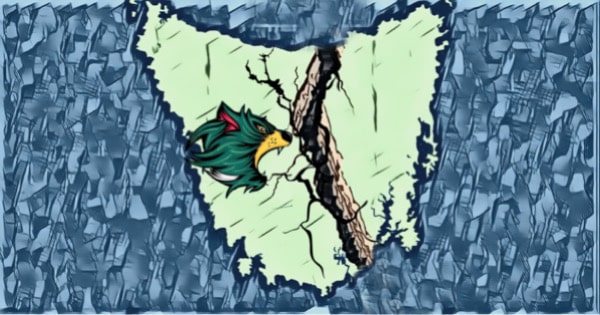

For much of the past century, Australian Rules football in Tasmania has occupied a unique and proud position within the broader national landscape. The state has consistently produced elite talent, fostered deeply-rooted community clubs, and maintained a football culture built on identity, loyalty, and tradition. Yet, over recent decades, that same system has experienced a gradual but undeniable decline.
The arrival of the Tasmania Devils marks a pivotal moment. It represents not only long overdue recognition from the AFL, but also a potential turning point for a football ecosystem that has struggled to maintain relevance in an increasingly nationalised competition. The central question is whether this new AFL licence can genuinely revitalise Tasmanian football, or whether it risks becoming an isolated success that fails to address deeper structural issues.
To fully grasp the scale of the challenge, it is important to reflect on what Tasmanian football once was. During the 1970s and 1980s, local leagues were thriving. Matches regularly drew strong crowds, particularly in the state league competitions, where attendances in the thousands were not uncommon. Grounds were full, atmospheres were intense, and clubs were deeply embedded within their communities.
Since that era, however, crowd numbers have steadily declined. What were once vibrant matchday experiences have, in many cases, become subdued affairs. While there are still pockets of strong support, the broader trend has been one of gradual disengagement. The reasons are complex, but the rise of the national competition has played a central role.
As the AFL expanded and consolidated its position as the premier competition in the country, attention shifted away from state leagues. Television coverage, sponsorship, and media focus increasingly centred on AFL clubs, leaving local competitions struggling to compete for relevance. Tasmania, without its own team, was particularly affected. Supporters gravitated towards mainland clubs, and local football lost its position as the primary focal point for fans.
This shift also altered player pathways, and arguably did more damage than any other single factor. For decades, some of Tasmania’s best young footballers have been forced to leave the state in order to pursue AFL opportunities. While Tasmania has continued to produce elite talent, the reality has been that many players have had to relocate to the mainland to maximise their chances of being noticed and drafted.
Names like Alastair Lynch, Matthew Richardson, and Jack Riewoldt are not just great AFL players, they are reminders of what Tasmania has consistently produced but rarely retained. More recent examples highlight the same issue in a modern context. Ben Brown developed his game in the VFL system before earning his AFL opportunity, while Jay Lockhart had to move interstate and take an unconventional path to break onto an AFL list.
These stories underline a long standing reality. Tasmania has functioned as a talent pipeline for the AFL, but without its own team, it has lacked the ability to keep that talent connected to the state at the highest level.
The cumulative effect has been a football ecosystem under strain. Declining crowds have reduced revenue, limited investment, and placed pressure on clubs that were once central to community life. In this context, the introduction of the Devils provides a rare and significant opportunity to reverse these trends.
At its core, the establishment of a Tasmanian AFL team restores a direct connection between local football and the elite level of the sport. For young players, the pathway is no longer defined solely by leaving the state. The prospect of representing Tasmania on the national stage introduces a powerful incentive to remain engaged within local systems, strengthening development structures and increasing retention.
From a cultural perspective, the Devils offer something that has been missing for generations. A team that belongs entirely to Tasmania. Early signs of engagement, including strong attendance at VFL fixtures, suggest that there is a latent appetite for high level football within the state. This renewed interest has the potential to flow through to community competitions, provided it is managed effectively.
However, the presence of an AFL team is not, in itself, a solution to decades of decline. One of the key risks is that the Devils could dominate the football landscape to such an extent that local competitions become further marginalised. If attention, sponsorship, and resources are concentrated exclusively at the elite level, the underlying issues affecting grassroots football may persist or even worsen.
For revitalisation to occur, a balanced approach is essential. Investment must extend beyond the AFL club to support community football, including facilities, coaching, and regional competitions. The Devils should be positioned not as a replacement for existing structures, but as a central component of a broader, integrated system.
Engagement with local clubs will be particularly important. Tasmanian football is built on strong community ties, and those connections must be preserved. By recognising the history and significance of local competitions, and by forming genuine partnerships with community clubs, the Devils can help strengthen rather than overshadow the grassroots level.
Infrastructure also remains a critical consideration. The development of a suitable stadium is necessary for the long term viability of the AFL team, but it must be part of a wider strategy that benefits the entire football ecosystem. Investment in elite facilities should be complemented by ongoing support for local grounds and community resources.
Ultimately, the success of the Devils as a catalyst for revitalisation will depend on governance and long term planning. The AFL, state authorities, and football administrators must adopt a comprehensive approach that addresses both immediate opportunities and structural challenges.
There are, however, clear reasons for optimism. The renewed visibility of Tasmanian football, combined with increased public engagement, suggests that the Devils have already begun to shift the narrative. The sense of identity and pride associated with a homegrown AFL team has the potential to re energise supporters and attract new participants to the sport.
The decline in crowds since the 1980s serves as a reminder of what has been lost, but it also highlights what could be regained. If the momentum generated by the Devils is harnessed effectively, there is an opportunity to rebuild the connection between communities and their local clubs, restoring the vibrancy that once defined Tasmanian football.
The Tasmania Devils represent more than just an expansion team. They are a symbol of possibility. Whether that possibility translates into genuine renewal will depend on the decisions made in the coming years.
Tasmanian football has reached a critical juncture. With strategic investment, strong leadership, and a commitment to the entire football ecosystem, the Devils can play a central role in reversing decades of decline. Without that broader vision, their impact may prove limited.
The opportunity for revitalisation is real. The challenge now is to ensure it is realised.
You can find more from Dave on his own substack, It’s a Dave Thing.